
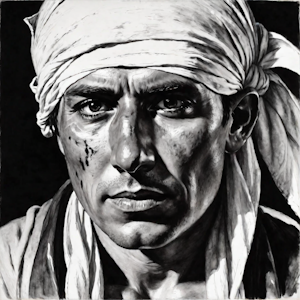
 Paulsgrave Williams was a pirate active between 1716 and 1723. He is sometimes referred to as Palsgrave or Palgrave. Williams is thought to have been born in about 1675 in Newport, Rhode Island to a well-off family. His father, John Williams, served as Attorney General of Rhode Island. He became a successful silversmith in Newport and married a woman whose first name was Elizabeth, but whose surname remains unknown. It is thought that he had at least three children with her. Williams is best known for working together closely with Black Sam Bellamy. The approximately 40-year-old Paulsgrave Williams was living in Boston with his family when he first encountered Bellamy in 1715. Tired of the sedentary life and with his business apparently not doing so well, the two men a headed south together in search of riches.
Williams and Bellamy
 Paulsgrave Williams became intrigued when Bellamy told him that he intended to plunder the wrecks of the sunken Spanish treasure fleet off the coast of Florida, in order to obtain enough wealth to marry a woman he was in love with. The two men sailed together with a few others in a small vessel purchased by Williams towards the Caribbean in early 1716 in search of the wrecks, but with little success. It was then they decided to switch to periaguas, which were small versatile boats, and turn to piracy rather than returning empty handed to New England. An attempt to capture a sloop was thwarted by the arrival of several other ships, which turned out not to belong to the Royal Navy, but to the pirate Henry Jennings. At first Williams and Bellamy concealed themselves, but later they joined forces with the new arrivals to capture the 16-gun, French ship St. Marie, commanded by Captain D’Escoubet. Williams and Bellamy were left in charge of the captured vessel while Jennings pursued another potential prize. The two men decided to sail off with the ship they had been entrusted with along with the booty before Jennings returned.
Williams the pirate
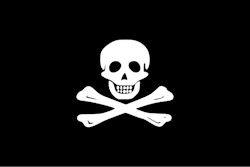 Not long after fleeing with Jennings’ prize, the pair of pirates encountered Captain Benjamin Hornigold, who was no friend of Jennings, joining him and sailing together with the French sea rover Olivier Levasseur and his ship Postillion. After the crew deposed Hornigold some time later for his reluctance to attack British ships, Bellamy was given command of Hornigold’s vessel Marianne, appointing Williams the quartermaster. They both used Nassau, New Providence as a base of operations, often sailing in consort with Levasseur. In December 1716, they were active in the Leewards Islands and Windward Passage, capturing several ships, including: Pearl and Sultana near the Virgin Islands; the merchant ship St. Michael of Bristol approximately nine leagues east of St. Croix in the Virgin Islands, which was transporting a cargo of sugar, indigo, and other goods valued at several thousand pounds. Williams took command of Marianne (Sometimes called Mary Anne), which had about 10 guns, while Bellamy took over Sultana, letting the Pearl leave with the crews of the two captured vessels. They went on to capture several more vessels before parting ways with the Levasseur. In February 1717, Williams played a key role in the capture of the 300-ton, 28-gun slave ship Whydah Galley, which was laden with gold, silver, and ivory valued at 20,000 to 30,000 pounds. Bellamy took it as his flagship. Williams and Bellamy then sailed north, briefly becoming separated by fog and storms, but eventually meeting up again and sailing towards Rhode Island. While Bellamy took the Whydah Gally to Cape Cod, Williams called in at Block Island, nine miles south of Rhode Island to visit relatives in April, possibly sharing some of his new-found wealth with them. While waiting to meet up again with Bellamy in May 1717, Williams heard the tragic news that Whydah had been wrecked in a storm off Cape Cod with the loss of most of the crew, including Bellamy.
William’s later pirating career
Not long later, William’s had to put down a mutiny led by some of the men in his crew who had been pressed into service by the pirates. He then arrived in the Bahamas, where he sold the Marianne, after which he accepted the King’s pardon along with many other pirates, including Hornigold and Jennings. In 1720, Williams is thought to have eventually returned to pirating, serving first under William Moody and then as quartermaster under Olivier Levasseur off the coast of Africa. He later worked together John Taylor and Edward England in the Indian Ocean until at least 1723.
Paulgrave Williams’ fate
After a successful career supporting Bellamy’s operations that captured at least 54 vessels between 1716 and 1717, it is thought that Williams attempted to retire from piracy after having sold Marianne and returning the Rhode island and residing there under an assumed name. It seems that he grew bored with the sedentary life again and returned to piracy. Some sources claim he finally retired from piracy in 1723 to settle down with his wife and family, but no-one really knows what became of him thereafter.