
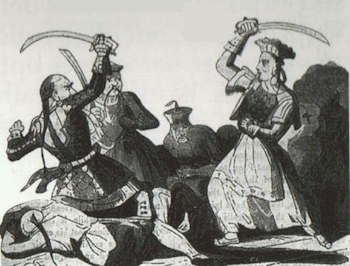
 The famous female pirate Zheng Yi Sao was also known under several other names, including Ching Shih. Not much is known about her early life except that she was of poor and humble origins. Despite that, she ended up commanding a pirate fleet consisting of as many as 70,000 men at its peak. It is known that she was born sometime around 1775 in southern China, possibly in Xinhui, which lies on the coast of the Guangdong province, to a family of fishermen. No-one is really sure of her real name, although it is thought to have been Shi Yang back then. She was later known as Zheng Yi Sao, meaning Ching’s wife, or Ching Shih, meaning Ching’s widow. It is often claimed that she might have started out as a prostitute, later marrying the most powerful pirate leaders, Zheng Yi, in 1801. She had two sons with Zheng Yi: Zheng Yingshi, born in 1803, and Zheng Xiongshi, born in 1807. The information available about her varies greatly as it is partly based on the English and Portuguese accounts, but in particular taken from one Chinese source: an account called Jing Hai Fen Ji by the Chinese official Yuan Yonglun, which was published in 1830 and has often been mistranslated or misinterpreted.
The pirate federation
Pirates and warlords were rife at the beginning of the 19th century, when poverty was widespread and the land was ruled over by a weak government that had failed to modernize. The rise of the pirates was aided by the Vietnamese hiring many Chinese privateers to fight in the Vietnamese Civil War known as the Tây Sơn war, who became increasingly powerful. After the end of the war the out-of-work privateers turned to piracy and their main fleet was divided into 6 smaller ones flying different colour flags: red, black, white, green, blue, and yellow. The Red Fleet was the most powerful one, consisting of 300 ships and up to 40,000 men. The second most powerful was the Black Fleet commanded by Guo Podai.
Zheng Yi Sao establishes control
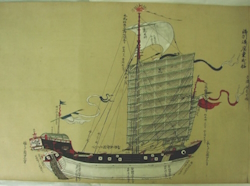 Already playing an active role in the running of the fleet, Zheng Yi Sao became a pirate leader after the death of her 42-year-old spouse in 1807, formally taking overall control of his pirate confederation with the support of Zheng Yi’s adopted son Zhang Bao Zai, who commanded the Red Fleet, and also allying with Guo Podai of the Black Fleet. I tis said that Zheng Yi had fallen overboard and drown during a storm. This vast confederation consisted of more than 400 vessels, known as junks, and as many as 70,000 men, which was definitely a force to be reckoned with in the region. At this point, Zheng Yi Sao became intimate with Zhang Bao, if she wasn’t already involved with him before her husband’s death.
The pirate code
The hierarchical leadership of the pirate fleets consolidated their control by establishing a strict set of articles containing harsh punishments, such as beheading, to keep the men under control. The crew were generally allowed to keep 20% of the plunder with the rest being collected in a public fund. Rape was punished by beheading, female captives either being sold as slaves if considered attractive or released if not. Its was possible for a male pirate to marry a female captive, but it meant life-long fidelity. Unfaithfulness was punishable by death. Other punishments including the cutting off of a deserter’s ears.
As well as the articles, religion was also a method of keeping the pirates, who were very religious, in line. There was even a temple on board one of at least one of their ships. It was also essential that no harm to be done to sympathetic peasants, in order to maintain their network of supporters and informants. Disobedience of an order would result in decapitation with the offenders body being thrown into the sea. Additionally, if someone who was not a commander gave orders, stole from the common treasury, or robbed the villages that supplied the pirates they were punished in a similar way.
Zheng Yi Sao the pirate
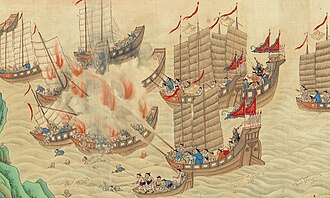 In September 1808, Zhang Bao ambushed Lin Guoliang and destroyed his fleet of 35 ships near Mazhou Island, located east of what is now Bao’an District, Shenzhen. In October, Zhang Bao defeated lieutenant-colonel Lin Fa, effectively destroying the provincial fleet. In March 1808, Sun Quanmou attacked the pirates near near Dawanshan Island with around 100 ships under his command. Zheng Yi Sao came to the aid of her comrades, taking command of the Red Flag and the White Flag Fleets. Together with Zhang Bao, she routed Sun’s force. In July of 1809, the Qing navy dealt a major blow to the Pirate Confederation by killing Liang Bao and destroying his White Flag Fleet. In August of the same year, Zheng Yi Sao led a large raid with Zhang Bao raiding around Dongguan with the Red Flag Fleet while Guo Podai raided around Shunde with the Black Flag Fleet. Zheng Yi Sao led a raid around Xinhui with her personal fleet. The pirates successfully raided villages and towns killing and capturing thousands.
In September 1809, Zheng Yi Sao personally took command of 500 ships and anchored near Tanzhou, two days later ordering Zhang Bao to raid the town of Shating further upriver. In October, she ordered Guo Podai to sail to around Jigongshi and carry out several raids, and, at the end of the month, a reconstructed provincial fleet was defeated near the town of Shawan. Zheng Yi Sao later branched out into the extremely profitable salt trade in the South China Sea, capturing many ships and the cargo of salt they were carrying. She took control of the salt trade by letting the traders continue the trade while giving her a cut of the profits. At this time, the Imperial navy was too weak to protect merchant ships so they had no choice but to pay the pirates protection money, as did the fishermen from coastal villages. The pirates set up an intricate network of protection money collectors with bases in all major towns on the coast, as well as effective supply and intelligence networks. On land, they were able to spread out their influence to bandit gangs and corrupt government officials.
…
Foreign powers intervene
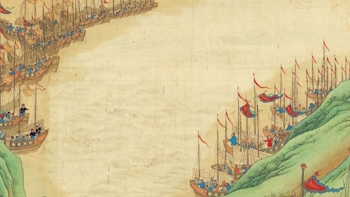 Zheng Yi Sao and the Pirate Confederation became so successful and powerful that the Chinese authorities reluctantly turned to the European powers for aid. They had been aided by the Portuguese in Macau since 1791 after the pirates had attacked several Portuguese trading vessels. In September 1809, pirates engaged two Portuguese ships: Princesa Carlota and Belisário, but were overwhelmed by the superior European firepower, such as rifled cannons firing explosive shells. Another encounter occurred when the Portuguese discovered 200 vessels of the pirate fleet at anchor, although indecisive, serious damage was inflicted on the pirates’ junks. Later the Qing signed a deal with the Portuguese, who continued harass the pirates throughout the year in return for the Qing paying for the fitting out of their ships and restoring the former trade privileges of Macau. A combined force of Qing and Portuguese vessels confronted the pirates, forcing them to withdraw after nine hours of combat. The Portuguese then returned to Macau. The East India Company also agreed to help the Qing rulers against the pirates in September 1809. The British wanted the support of the Chinese, so they sold weapons to the pirates in the hope they would defeat the Portuguese, forcing the Qing to turn to them for help.
In December 1809, the pirates gathered near Macau, but were forced to withdraw, after which Zhang Bao unsuccessfully attempted to make a separate peace with the Portuguese. The Black Fleet defected to the Chinese authorities. In January 1810, the pirates mobilised 300 ships in an attempt to once and for all defeat the Portuguese, who were anchored at Lantau Island, but they were outgunned, forcing them to flee to a shallow river which the large European ships couldn’t enter. The Portuguese, supported by 93 vessels of the Chinese provincial fleet, hemmed in the pirate ships and numerous attempts to break the blockade failed, although the pirates did manage to capture one vessel of the provincial fleet, killing its entire crew. The situation developed into a stalemate, so the commander of the provincial fleet, Sun Quanmou, decided to convert 43 of his vessels into fireships, which he sent towards the trapped pirate fleet. The pirates managed to divert most of the fireships ashore where they extinguished the flames. Two of the flaming vessels were blown by the wind back towards the Chinese fleet, setting two of Sun’s own vessels ablaze. Taking advantage of the chaos, the pirates broke through the blockade into the South China Sea.
Zheng Yi Sao’s fate
 It is unsure exactly why the pirate federation surrendered, but with the pirate federation seemingly slowly disintegrating due to the growing discord among the pirate leaders, the time seemed ripe to negotiate while the pirates were still powerful enough to gain the concessions they desired. Zheng Yi Sao negotiated a surrender to the Qing authorities in 1810 which allowed her and Zhang Bao to keep 80 of her junks and made it possible for her and the other pirates to avoid prosecution. The negotiations initially broke down when the Viceroy of Liangguang, Bai Ling, refused Zheng Yi Sao and Zhang Bao’s demand of retaining 5,000 men and 80 ships for use in the salt trade and for joining the anti-pirate campaign in western Guangdong, as not all the pirates were willing to surrender themselves to the authorities. The Viceroy finally conceded to Zheng Yi Sao’s demands when she led a delegation of women and children to negotiate with him. On 20th April 1810, Zheng Yi Sao and Zhang Bao officially surrendered to Bai Ling near Furongsha. She later became involved in the civil and military administration of the province. Zheng Yi Sao died in 1844 at the age of about 68, having lived a relatively peaceful and prosperous life after the end of her career in piracy. She has been described as the most successful female pirate, if not the most successful of all pirates, although her exact role as a leader and how much authority she really had still remains unclear. Although she probably didn’t participate in any actual fighting, she did show herself to be a more than competent leader.
One comment