
A General History of the Pyrates by Captain Charles Johnson
 A General History of the Pyrates by Captain Charles Johnson was published in 1724. As the primary source of biographies of some of the most notorious pirates it influenced popular conceptions of the lifestyles. Missing legs or eyes, burying treasure and the name of the pirates flag the Jolly Roger was introduced in this touchstone of pirate lore as it has been incorporated into popular culture. A General History of the Pyrates has influencing literature and movies to this day.
This book can be read online on the Internet Archive website. The 1728 volume is available on the Project Gutenberg site.
Pages: 280
Published: 2012 (first published 1724)
ISBN: 978-1479322572
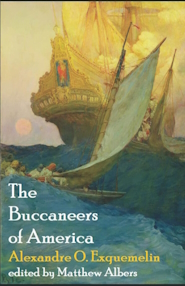 The West Indies in the late 17th Century was home to a group of sea raiders that were not yet pirates, and not quite privateers. The Buccaneers. The Brethren of the Coast, as they called themselves, lived dissolute lives of violence, debauchery, thievery, & murder.
 Over the last couple of decades, an ideological battle has raged over the political legacy and cultural symbolism of the “golden age” pirates who roamed the seas between the Caribbean Islands and the Indian Ocean from roughly 1690 to 1725. They are depicted as romanticized villains on the one hand and as genuine social rebels on the other.
  Villains of All Nations explores the ‘Golden Age’ of Atlantic piracy (1716-1726) and the infamous generation whose images underlie our modern, romanticized view of pirates.
 The common seaman and the pirate in the age of sail are romantic historical figures who occupy a special place in the popular culture of the modern age. And yet in many ways, these daring men remain little known to us. Like most other poor working people of the past, they left few first-hand accounts of their lives. But their lives are not beyond recovery. In this book, Marcus Rediker uses a huge array of historical sources (court records, diaries, travel accounts, and many others) to reconstruct the social cultural world of the Anglo-American seamen and pirates who sailed the seas in the first half of the eighteenth century. Rediker tours the sailor’s North Atlantic, following seamen and their ships along the pulsing routes of trade and into rowdy port towns.…