
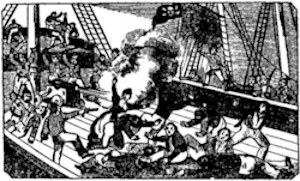
 This law was enacted during the reign of Charles II and its full name was An Act to prevent the delivery up of Merchants Shipps, and for the Increase of good and serviceable Shipping. It came into being because the captains and crews of merchant vessels commonly refused to fight when attacked by pirates. The act stipulated that ships of 200 tons or more possessing at least sixteen guns were required to fight, as long as the pirate vessel didn’t have twice as many guns. Failing to resist would result in the commander being excluded from any further commands of English ships and even imprisonment.
Category: Acts
Offences at Sea Act 1536
 In the 14th century Edward III (1327-1377) attempted to set up how admiralty courts should deal with piracy in A Remedy where a Merchant’s Good be robbed or perished on the Sea, but these were rather vague laws and there was often the problem of overlapping jurisdictions when dealing with such a crime. It was wasn’t until the reign of Henry VIII (1509–1547) that significant anti-piracy laws were enacted. Originally titled An Act for Pirates and Robbers on the Sea issued in 1535, it was renamed The Offences of Sea Act in 1536.
This act allowed crimes such as robbery and murder to be tried as if they occurred on land. They could be tried in any county in England in any court commissioned by the king under related common law provisions for these offences. Those found guilty of piracy and treason at sea could not only be sentenced to death, but also have their lands and possessions seized.…