
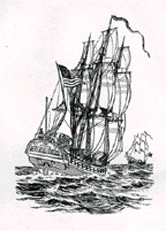
 Under this act British subjects serving as privateers for an enemy of Great Britain could be tried for a felony not treason. It was easier to convict someone of a felony than prove treason. It was passed during the War of Austrian Succession waged from 1740 to 1748, in which Britain fought against France and Spain. As with many wars before, privateers were an integral part of the armed forces of all powers, and it would seem that British citizens regulary found employment with foreign powers.
An example of using privateers to support navies, occurred in 1744, when a British force of 300 men accompanied by two privateers from Saint Kitts successfully captured the French half of neighbouring Saint Martin. In late May 1745, two French royal frigates of 36 and 30 guns respectively under Commodore La Touché, together with three privateers sailed from Martinique to invade and capture the British colony of Anguilla in retaliation, but were repelled with heavy loss in the Battle of Anguilla.…
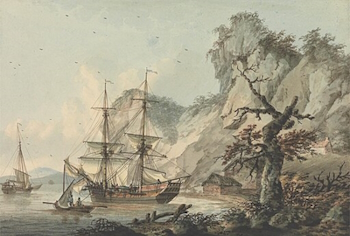 This act’s longer title is: An Act for the more effectual suppressing of Piracy. Its aim was to counter the rapid growth of piracy in the early 18th century by removing some deficiencies in the preceding piracy laws. It was mainly concerned with those who dealt with and supported the pirates and other criminals, requiring commanders of vessels and others who traded with pirates or supplied them in any way to be treated as pirates themselves. The act included provisions for the confiscation of any ill-gotten cargo and the offending commander’s ship. It’s main aim was to undermined support for the pirates. The act was repealed on 5th November 1993.
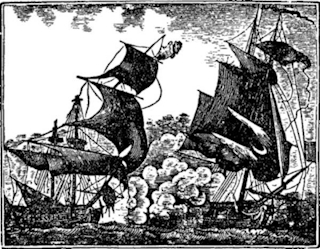 The Piracy Act 1717 was an Act of the Parliament of Great Britain. Its long title was “An Act for the further preventing Robbery, Burglary, and other Felonies, and for the more effectual Transportation of Felons, and unlawful Exporters of Wool; and for declaring the Law upon some Points relating to Pirates.”
 This act was passed during the reign of William III. The main purpose behind the statute was to make some corrections to the Offences at Sea Act 1536. These changes included allowing for acts of piracy to be “examined, inquired of, tried, heard and determined, and adjudged in any place at sea, or upon the land, in any of his Majesty’s islands, plantations, colonies, dominions, forts, or factories”. This enabled admirals to hold a court session to hear the trials of pirates in any place they deemed necessary, rather than requiring that the trial be held in England, thus avoiding the costly and time-consuming transport of captured pirates across the Atlantic. It also meant those accused of piracy didn’t necessarily have to be tried by a jury.