Seamanship in the Age of Sail: An Account of Shiphandling of the Sailing Man-O-War, 1600-1860 by John Harland
 Numerous successful reprints of contemporary works on rigging and seamanship indicate the breadth of interest in the lost art of handling square-rigged ships. Modelmakers, marine painters and enthusiasts need to know not only how the ships were rigged but how much sail was set in each condition of wind and sea, how the various manoeuvres were carried out, and the intricacies of operations like reefing sails or ‘catting’ an anchor. Contemporary treatises such as Brady’s Kedge Anchor in the USA or Darcy Lever’s Sheet Anchor in Britain tell only half the story, for they were training manuals intended to be used at sea in conjunction with practical experiences and often only cover officially-condoned practices. This book, on the other hand, is a modern, objective appraisal of the evidence, concerned with the actualities as much as the theory.…
 The Barbary Corsairs first appeared to terrorise shipping in the 16th century. These Muslim pirates sailed out of the ports of North Africa, primarily Sal , Rabat, Algiers, Tunis, and Tripoli. This area was known in Europe as the Barbary Coast, a term derived from the name of its Berber inhabitants. Acting as officers of the sprawling Ottoman Empire, these pirates plundered the trading routes of the Mediterranean and sowed horror in the hearts of Christians everywhere. The most famous and powerful were the Barbarossa brothers, sons of a renegade Christian. The true founders of the Algiers Regency, they initially preyed on fishing vessels or defenceless merchantmen before growing bolder and embarking upon more brazen expeditions attacking fortified ports and cities; raiding and kidnapping inhabitants of the African coast; and hunting ships from the Christian nations. This translation of Jacques Heers work follows the extraordinary exploits of the brothers, and those of other corsairs and profiteers, set against the turbulent backdrop of trade, commerce and conflict throughout the Mediterranean during the 14th-16th centuries.It…
 From the voyage of the Argonauts to the Tailhook scandal, seafaring has long been one of the most glaringly male-dominated occupations. In this groundbreaking interdisciplinary study, Margaret Creighton, Lisa Norling, and their co-authors explore the relationship of gender and seafaring in the Anglo-American age of sail. Drawing on a wide range of American and British sources-from diaries, logbooks, and account ledgers to songs, poetry, fiction, and a range of public sources-the authors show how popular fascination with seafaring and the sailors’ rigorous, male-only life led to models of gender behavior based on “iron men” aboard ship and “stoic women” ashore. Yet Iron Men, Wooden Women also offers new material that defies conventional views. The authors investigate such topics as women in the American whaling industry and the role of the captain’s wife aboard ship. They explore the careers of the female pirates Anne Bonny and Mary Read, as well as those of other women-“transvestite heroines”-who dressed as men to serve on the crews of sailing ships.…
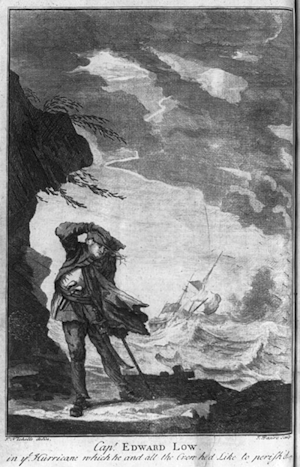 Presuming all the tales of his exploits are true, Edward Lowe, also Low or Loe, was probably the most cruel and bloodthirsty pirate of the Golden Age, possibly second only to Fran
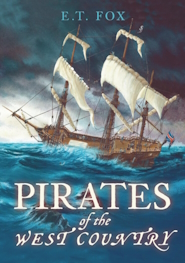 Upon every ocean and sea, pirates have been ready to plunder, to rob and to murder for profit. England has always been a nation of mariners, and the West Country has for centuries been one of the busiest parts of maritime England. It is natural, therefore, that a great many of the pirates of history have been English, and that a good proportion of those have been men of the West. Discover the handful of true West Country pirates of the past and also those that voyaged from the West to the Caribbean and Indian Ocean in this compelling history. Herein lies a true account of piracy, often called the ‘oldest trade afloat’.