The Life and Tryals of the Gentleman Pirate, Major Stede Bonnet by Jeremy R. Moss
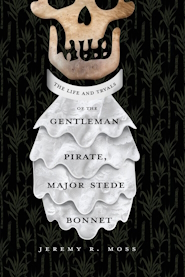 An heir to an established land-owning aristocratic family in Barbados, Major Stede Bonnet enjoyed luxuries equal to those of the finest houses in London. “A Gentleman of good Reputation” and a “Master of a plentiful Fortune,” he was given “the Advantage of a liberal Education,” but the call of the sea-and perhaps more significantly, the push of his obligations as a father and husband-cast Major Bonnet onto an unlikely and deliberate course toward piracy. Easily likable, by friend and foe, many would be drawn to Bonnet. In his two short years of piracy, Stede Bonnet stood alongside some of the New World’s most notorious pirates, including Charles Vane, Charles Condent (also known as “Billy One-Hand”), Robert Deal, “Calico” John Rackham, Israel Hands, Benjamin Hornigold, William Kidd, Mary Read, Anne Bonny, and the pirate to whom Bonnet would forever be connected, Edward Thatch (infamously known around the world as “Blackbeard”).…
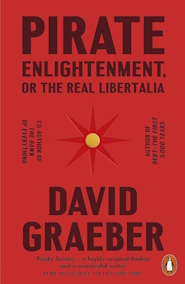 The Enlightenment did not begin in Europe. Its true origins lie thousands of miles away on the island of Madagascar, in the late seventeenth century, when it was home to several thousand pirates. This was the Golden Age of Piracy – but it was also, argues anthropologist David Graeber, a brief window of radical democracy, as the pirate settlers attempted to apply the egalitarian principles of their ships to a new society on land.
 Pirates in Their Own Words is a collection of original documents relating to the ‘golden age’ of piracy. Letters, testimonies, witness accounts and other primary source documents written by the pirates themselves, their victims, and the men who hunted them down.
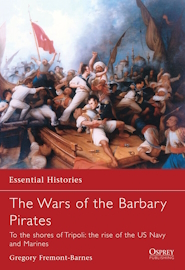 The Barbary War – the first American war against Libya – was the first war waged by the United States outside national boundaries after gaining independence and unification of the country. The four Barbary States of North Africa – Morocco, Algiers, Tunis, and Tripoli – had plundered seaborne commerce for centuries. This was piracy on an extraordinary scale: they controlled all trading routes through the Barbary waters and North Africa: demanding ransom and booty for safe passage. In 1801 the newly elected President Jefferson ordered a naval and military expedition to North Africa in order to put down regimes that endorsed piracy and slavery. The Pasha of Tripoli declared war on the United States. Under the leadership of Commodores Richard Dale and Edward Preble, the US Navy blockaded the enemy coast and engaged in close, bitterly contested gunboat actions.…