
Ship – 5000 Years of Maritime Adventure by Brian Lavery
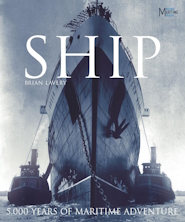 Whether you’re a Master, Commander or Pirate of the Caribbean, this is the vessel for you. From the earliest canoes to today’s sophisticated ocean-going giants, Christopher Columbus to Ellen MacArthur, witness the drama, the splendour and excitement of Ship’s story above and below the waves, through centuries of exploration, endeavour and conflict. Produced in association with the National Maritime Museum.
Pages: 400
Published: 2005
ISBN: 978-1405311540
 The story of pirates and privateers was actually a tale of legalities and illegalities, separated by a thin statutory line marking those on one side as criminals and the other side as heroes worthy of reward. The illegal and universally condemned acts of maritime piracy and the legal and nationally praised acts of maritime privateering are the basis for this book. Nearly two hundred legal issues are identified among more than a hundred trials of pirates and prize ships seized by privateers, across several centuries of American and British history. These range from the intention to turn pirate, pirates as witnesses, common versus civil law piracy, trying foreign pirates, and special proofs for convicting women, physician, child, indigent, and Black pirates to the use of letters of marque and reprisals versus privateering commissions, condemning or acquitting neutral ships and cargo, the impact of fraudulent ship’s papers, the law of nations versus municipal law, and flying false colors during an attack.…
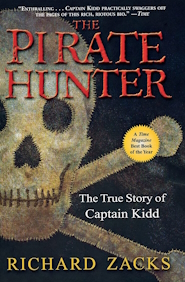 This harrowing tale traces Kidd’s voyages in the 1690s from his home near Wall Street to Whitehall Palace in London, from the ports of the Caribbean to a secret pirate paradise off Madagascar. Author Richard Zacks, during his research, also unearthed the story of a long forgotten rogue named Robert Culliford, who dogged Kidd and led Kidd’s crew to mutiny not once but twice. The lives of Kidd and Culliford play out like an unscripted duel: one man would hang in the harbor, the other would walk away with the treasure. Filled with superb writing and impeccable research,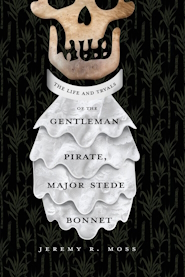
 The Enlightenment did not begin in Europe. Its true origins lie thousands of miles away on the island of Madagascar, in the late seventeenth century, when it was home to several thousand pirates. This was the Golden Age of Piracy – but it was also, argues anthropologist David Graeber, a brief window of radical democracy, as the pirate settlers attempted to apply the egalitarian principles of their ships to a new society on land.